What Is a Demand Draft (DD)? Types, Fees, and How to Get One
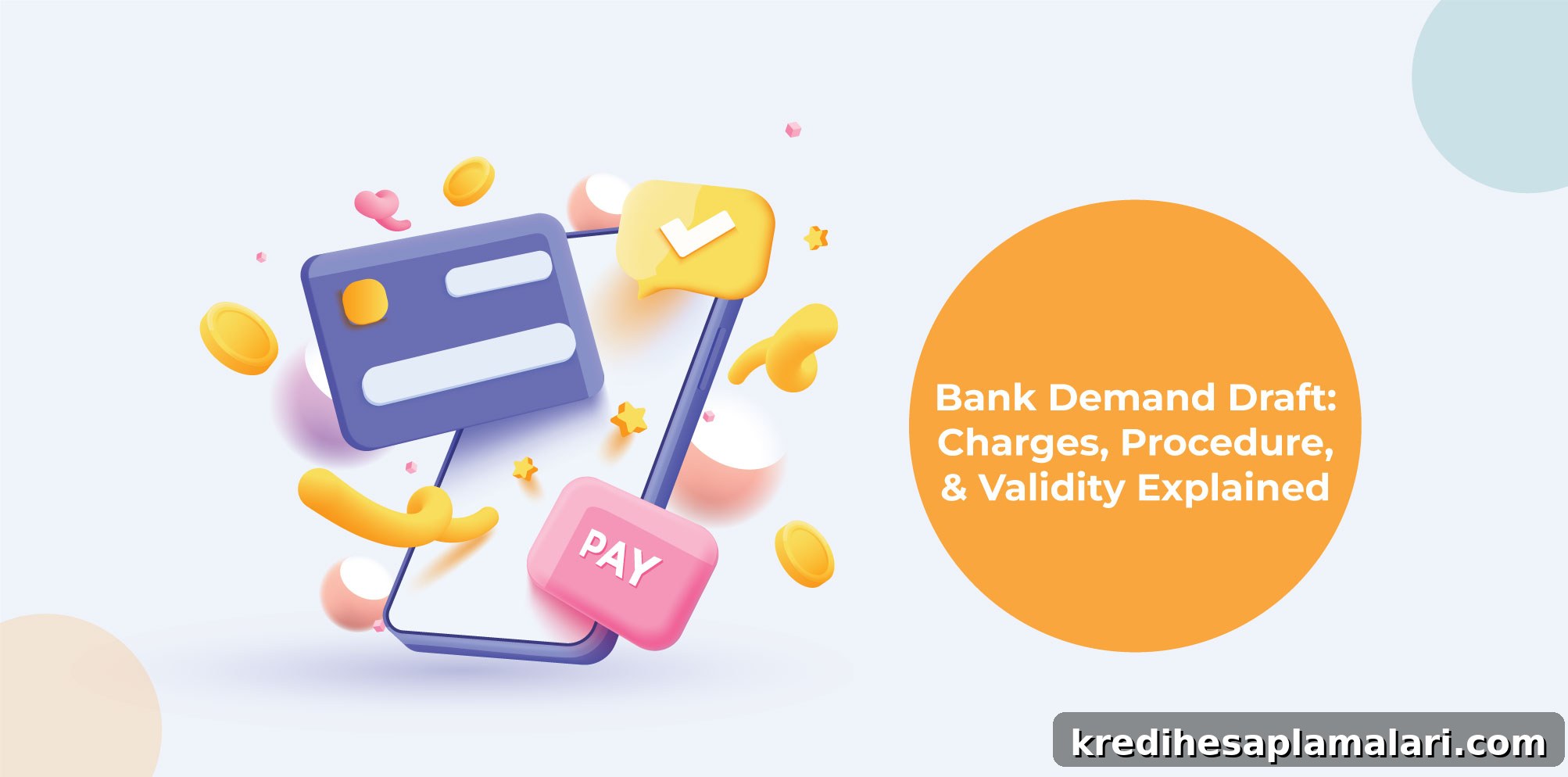
A Demand Draft (DD) is a secure prepaid banking instrument used to transfer funds to an individual, company, educational institution or government body. Commonly requested for college fees, examination or application charges, property transactions, tender deposits and formal business payments, a DD provides the recipient with assurance because the bank collects the amount in advance. Unlike a cheque, a DD has minimal risk of bouncing since the issuing bank already holds the funds.
This guide covers the full form and meaning of DD, the information required to issue one, typical charges, validity, types, the issuance and cancellation process, relevant RBI guidelines and the main differences between a demand draft and a cheque.
What is a Demand Draft (DD)?
DD stands for Demand Draft. It is a payment instrument issued by a bank after the payer deposits the amount—by cash, cheque or account debit. The bank issues the DD in the name of the payee, guaranteeing payment when the draft is presented and verified. For example, a college may insist on a DD for admission fees (say ₹75,000) instead of a cheque so it has certainty that the funds are available. The payee usually deposits the DD into their bank account, and once processed the amount is credited.
What Details Are Required for a Demand Draft?
When requesting a demand draft, you will generally need the following details:
| Detail Required | Meaning |
|---|---|
| Payee name | Name of the person, company, college or authority receiving the payment |
| Amount | DD amount in figures and words |
| Payable location | City or branch where the DD is payable |
| Drawer details | Name and address of the person making the DD |
| Purpose of payment | Reason such as fees, deposit, tender or application payment |
| Payment mode | Cash, cheque or account debit |
| PAN details | Required for transactions of ₹50,000 or more |
| Signature | Signature of the person requesting the DD |
Always double-check the payee name spelling and the amount in both figures and words before submitting the request to avoid delays or rejection.
Demand Draft Charges
Banks levy a fee for issuing, cancelling or revalidating a demand draft. Fees vary by bank, the DD amount and how the request is made. The following table lists indicative charges reported by various banks; these are illustrative and subject to change, so confirm current fees with your bank.
| Bank | Indicative Demand Draft Charges |
|---|---|
| HDFC Bank | May start from around ₹75 per draft; higher amounts may be charged per ₹1,000 |
| ICICI Bank | May be free for small drafts; higher values may be charged per ₹1,000, subject to limits |
| SBI | Charges may start from ₹25 for small DDs and increase with the amount |
| PNB | Charges may vary for rural and urban branches; usually charged slab-wise |
| Axis Bank | May offer limited free DDs for select accounts; higher amounts may attract charges |
| HSBC | Charges may start from around ₹100 and vary by amount |
| Bank of Baroda | Charges may start from around ₹50 and increase based on value |
Note: These charges are indicative. Banks update fee schedules periodically, so check the latest rates at your branch or on your bank’s official channels.
Demand Draft Validity
A demand draft is generally valid for three months from the date of issue. If not presented within this period it becomes invalid for payment. The drawer can request the issuing bank to revalidate the DD; revalidation typically extends validity by another three months but may attract a fee and is not always renewable beyond the extended period. The funds remain with the bank until refunded or reissued.
Types of Demand Draft
There are two common types:
1. Sight Demand Draft
Payable when presented to the bank with required documents. The bank verifies and processes payment immediately upon presentation.
2. Time Demand Draft
Payable only after a specified date or period mentioned on the draft. Commonly used in business transactions with scheduled payments.
Features of a Demand Draft
Key features include:
- Prepaid instrument: the amount is paid to the bank before issue.
- Low bounce risk: funds are guaranteed by the issuing bank.
- Payee-specific: issued in the name of a specific person or organisation.
- Fixed amount: the amount cannot be altered after issue.
- Widely accepted: used by colleges, businesses and government bodies.
- Suitable for large payments: ideal for formal and high-value transactions.
- Cancelable or revalidatable: can be cancelled or revalidated if unused, subject to bank rules and charges.
How to Make a Demand Draft Offline
To get a DD at a bank branch:
Step 1: Visit your bank branch.
Step 2: Request and complete the demand draft application form.
Step 3: Provide payee name, amount, payable city and purpose.
Step 4: Submit valid ID proof if required.
Step 5: Pay the DD amount and bank charges via cash, cheque or account debit.
Step 6: Furnish PAN if the amount is ₹50,000 or more.
Step 7: Collect the DD and verify payee name, amount and date. Keep the receipt for tracking, cancellation or revalidation.
How to Request a Demand Draft Online
Many banks support DD requests through internet banking or mobile apps. Typical steps:
Step 1: Log in to net banking or mobile banking.
Step 2: Navigate to Requests, Service Requests or Issue Demand Draft.
Step 3: Select the debit account.
Step 4: Enter payee name, amount, payable location and purpose.
Step 5: Choose delivery mode—courier or branch pickup.
Step 6: Review details carefully and submit; note the reference number. Delivery or pickup timelines vary by bank.
How to Use a Demand Draft
- Submit to educational institutions for fees.
- Attach with government applications or forms.
- Use for property payments, deposits or earnest money.
- Submit for tenders, security deposits or formal business payments.
- Deposit a received DD into your bank account to receive credit.
- Retain the acknowledgement or receipt after handing over the DD.
How to Cancel a Demand Draft
A DD can usually be cancelled if it has not been deposited or cleared by the payee. Typical procedure:
Step 1: Visit the issuing bank branch with valid ID and the original DD.
Step 2: Complete the DD cancellation form, providing DD number, amount, issue date, payee name, account number and reason.
Step 3: Pay applicable cancellation charges.
Step 4: The bank verifies the DD status and refunds the amount to the drawer’s account after deducting charges.
Sample Demand Draft Cancellation Letter
To
The Branch Manager
[Bank Name]
[Branch Address]
Subject: Request for Cancellation of Demand Draft
Dear Sir/Madam,
I request cancellation of the demand draft issued from my account. Details are as follows:
| Particular | Details |
|---|---|
| DD Number | [Enter DD number] |
| Amount | [Enter amount] |
| Issue Date | [Enter date] |
| Payee Name | [Enter payee name] |
| Account Number | [Enter account number] |
The demand draft has not been delivered to or deposited by the payee. Kindly cancel it and refund the amount to my account after deducting applicable charges.
Yours faithfully,
[Your Name]
[Contact Number]
[Signature]
RBI Guidelines for High-Value DDs and Cash
Key rules and practices to note:
- Demand drafts of ₹50,000 or more are generally not issued against cash.
- High-value DDs are usually issued through account debit, cheque or other traceable modes.
- PAN details are required for DDs of ₹50,000 or above.
- A DD is generally valid for three months from the issue date.
- Expired DDs can be revalidated by the issuing bank on request, subject to bank policy.
- DDs are normally credited to the payee’s bank account rather than treated as direct cash withdrawals.
These provisions increase traceability and security for larger transactions.
Demand Draft vs Cheque: Key Differences
Both are payment instruments, but they differ in how payment is guaranteed. A cheque is drawn by an account holder and may bounce if there are insufficient funds. A demand draft is issued by a bank after collecting the amount in advance, offering stronger assurance to the recipient.
| Difference | Demand Draft | Cheque |
|---|---|---|
| Issued by | Bank | Account holder |
| Payment assurance | High | Depends on account balance |
| Bounce risk | Very low | Possible |
| Best for | Fees, deposits, official payments | Regular, routine payments |
| Security | More secure | Comparatively less secure |
| Payment basis | Prepaid | Paid when presented |
Advantages of Demand Draft
- Provides assured payment to the payee.
- Does not bounce for lack of funds.
- Suitable for official and high-value transactions.
- Widely accepted by educational institutions, government bodies and businesses.
- May not always require the receiver’s bank account details.
- Provides proof of payment through the DD receipt.
- Cancelable or revalidatable if not used within the allowed period, subject to bank policy.
Conclusion
A demand draft is a reliable payment method for formal transactions where guaranteed funds are required. It is especially useful for college fees, government applications, property payments, tender deposits and business transactions because the bank holds the funds in advance. Before issuing a DD, verify the payee name, amount, payable location, validity period and bank charges to avoid rejection or delays.
FAQs on Demand Draft
1. What is DD in bank?
DD means Demand Draft, a prepaid banking instrument issued by a bank to make secure payments.
2. How do you make a demand draft?
You can make a DD at a bank branch or via internet/mobile banking by providing payee name, amount, payable city and purpose, then paying the amount and applicable charges.
3. Can a demand draft be made online?
Yes. Many banks accept DD requests through net banking or mobile apps, with options for branch pickup or courier delivery depending on the bank.
4. How do you make a DD with cash?
Visit a branch, fill the DD form and submit cash. For DDs of ₹50,000 or more, banks typically require account debit, cheque or another traceable payment mode.
5. What happens if a demand draft expires?
An expired DD cannot be used for payment. The drawer can request revalidation from the issuing bank, usually extending validity by another three months subject to the bank’s policy.
6. What is the difference between a demand draft and a cheque?
A DD is issued by a bank after receiving the funds in advance; a cheque is issued by an account holder and can bounce if sufficient balance is not available.
7. What is the maximum limit of DD?
There is typically no universal upper limit set for DDs, but banks may impose internal limits and PAN is usually required for DDs of ₹50,000 or more.