Video KYC Explained: What It Is, Benefits, and Simple Steps

Advances in the financial sector have brought many conveniences. From applying for a personal loan to completing verification through video KYC, much can now be done online. This contactless process allows you to finish verification without exchanging physical paperwork or visiting the lender’s office.
Below explains what video KYC is, how it works, its benefits, and practical tips to prepare.
What is Video KYC?
Video KYC, also known as the video-based customer identification process (V-CIP), is a secure method for financial institutions to verify a customer’s identity in real time using a live video call. Key points include:
- A representative from the financial institution conducts a live video call and captures your image.
- You present original identity documents directly on camera for inspection.
- The representative cross-checks those documents against the information submitted with your loan or account application during the same call.
- Because it involves live interaction and secure capture of visual evidence, video KYC can be more reliable than some traditional verification methods.
Benefits of Video KYC
More financial institutions are adopting video KYC for account openings, credit applications and other services. The main advantages are:
- Fast identity verification—often completed in minutes.
- No need to travel or carry physical documents; you can complete verification from home.
- Greater convenience and time savings for customers.
- Improved access to financial services in remote areas that lack physical branches.
Steps Involved in the V-KYC Account Opening Process
The video KYC process is straightforward and typically quick. A standard flow for personal loan KYC includes:
- Step 1: Use a device with a front-facing camera or webcam and a stable internet connection. Gather the documents you will need to show.
- Step 2: Complete Aadhaar-based e-KYC if required by providing your Aadhaar number or retrieving Aadhaar details from DigiLocker, and verify with the OTP sent to your registered mobile number.
- Step 3: Join the audio-video call at the scheduled time using the link sent by the financial institution via email or SMS.
- Step 4: Clearly display identification documents such as Aadhaar and PAN cards on camera when requested.
- Step 5: The representative will take a live photo for identity verification and may ask a few questions to confirm details against the documents shown.
- Step 6: After the video KYC is complete, the institution reviews the application and informs you of approval or rejection.
Tips to Prepare for Video KYC for a Personal Loan
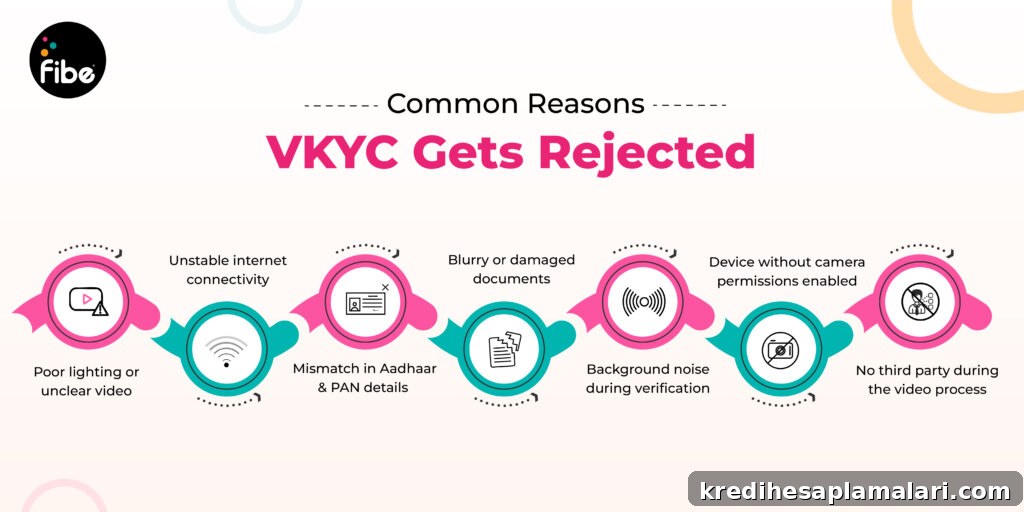
Although the process is simple, the following tips help ensure a smooth video KYC:
- Use a device with a working camera and microphone—smartphone, tablet, laptop or desktop—so the representative can see and hear you clearly.
- Collect all necessary identification documents in advance so you can display them quickly when requested.
- Ensure a stable, reasonably fast internet connection to avoid interruptions during the call.
- Choose a well-lit area with a plain background so your face and documents are clearly visible on camera.
Video KYC simplifies opening bank accounts, applying for loans and completing other financial transactions. For example, some lenders offer fully digital instant cash loans with minimal formalities and competitive rates, allowing you to apply from home via a mobile app or website.
FAQs on Video KYC
What will they ask in the video KYC?
During the video KYC call, the representative verifies your identity and may ask for basic personal details and questions related to your application to confirm the information on the documents shown.
What is the difference between video KYC and physical KYC?
Physical KYC requires visiting the financial institution’s office so staff can inspect documents in person. Video KYC completes the same verification digitally over a live audio-video call, eliminating the need for an in-person visit.
Is the original PAN required for video KYC?
Yes. You should have the original PAN card available to show on camera so the representative can compare it with the application details and confirm your identity.
What if video KYC is not done?
KYC is typically mandatory to avail of most financial products or services. If KYC is not completed, your application may be declined or processing delayed.
Do I need to book an appointment for video KYC?
Usually you do not need to separately book an appointment; the financial institution schedules the video KYC session and shares a time slot or link based on your availability.