IDV in Motor Insurance: Meaning and How It’s Calculated
This article explains what IDV (Insured Declared Value) means in motor insurance, how it is calculated using IRDAI’s depreciation schedule, and why choosing the right IDV affects both your annual premium and claim payout. It covers cars and two-wheelers and takes about five minutes to read.
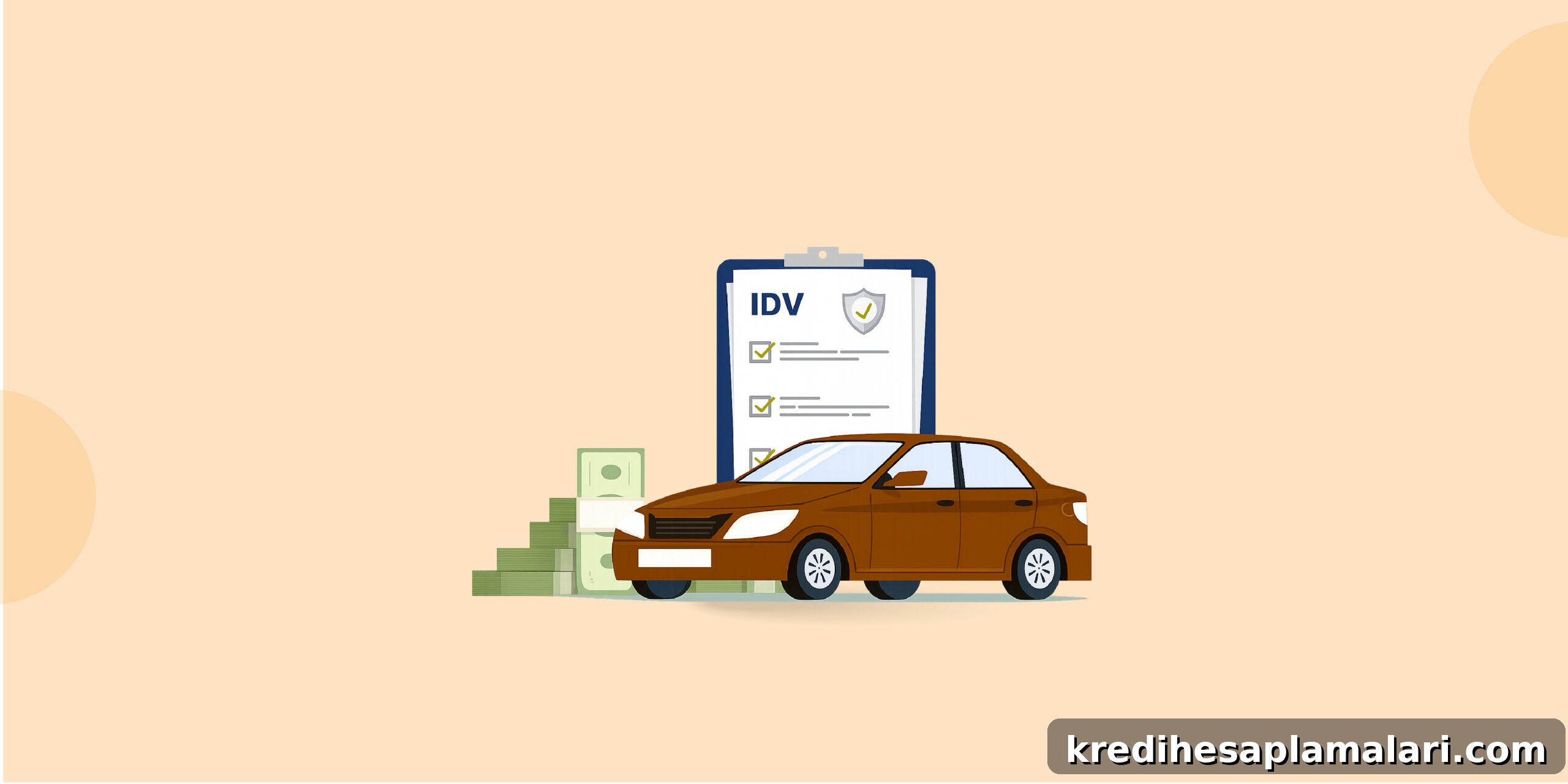
IDV — Insured Declared Value — is the single most important figure when a claim becomes a total loss or a theft. If your car is stolen or written off after an accident, the insurer’s maximum payout is capped at the IDV. It is not the price you originally paid; it is the vehicle’s current insured value after depreciation. Setting the IDV correctly ensures adequate protection. Setting it too low to save on premium can leave you with a large shortfall when you need a payout.
Why Does IDV Matter for Your Motor Insurance Policy?
IDV controls two main things: the maximum payout in a total loss or theft claim, and the own-damage portion of your annual premium. A higher IDV means a larger potential payout and a slightly higher premium. A lower IDV reduces the premium but also reduces the amount you receive if the vehicle is declared a total loss.
For example, if your IDV is ₹5,00,000 and your car is stolen, you would receive ₹5,00,000 minus deductibles. If the market value of the car was actually ₹6,50,000, you would face a shortfall of ₹1,50,000. That gap is real and unrecoverable from the insurer — a common form of underinsurance caused by aiming to save on premium.
WATCH OUT
Setting a very low IDV to reduce premium savings may seem smart, but insurers pay only up to the IDV in a total loss claim, not the true market value. Do not set IDV significantly below your vehicle’s current market value.
QUICK STAT
As of 2025, third-party-only policies account for roughly 66% of motor insurance policies in India, meaning only about one in three insured vehicles carries comprehensive own-damage cover with IDV protection.
How Is IDV Calculated in India?
The calculation follows IRDAI’s Indian Motor Tariff (GR-8). IDV is defined as the vehicle’s Sum Insured and is set at the start of each policy period based on the manufacturer’s listed ex-showroom price minus age-based depreciation. This is a regulator-defined method and applies across insurers.
IDV = Manufacturer’s listed ex-showroom price − Depreciation
The depreciation rates are fixed by regulation and depend only on the vehicle’s age, not on maintenance or low mileage. The standard IRDAI schedule is:
| Vehicle Age | Depreciation Rate | IDV as % of Ex-Showroom Price |
|---|---|---|
| Under 6 months | 5% | 95% |
| 6 months to 1 year | 15% | 85% |
| 1 to 2 years | 20% | 80% |
| 2 to 3 years | 30% | 70% |
| 3 to 4 years | 40% | 60% |
| 4 to 5 years | 50% | 50% |
After five years, the prescribed table no longer applies and IDV is negotiated between you and the insurer based on the car’s condition, model, and actual second-hand prices.
DID YOU KNOW? IDV is calculated on the ex-showroom price, not the on-road price. GST, registration and road tax are excluded. Manufacturer-fitted accessories are included in the ex-showroom price; aftermarket accessories must be declared separately to be covered.
IDV Calculation Example: Priya’s Maruti Swift
Priya buys a brand-new Maruti Swift LXi with an ex-showroom price of ₹8,00,000. Her IDV over the first five years changes as depreciation is applied:
| Policy Year | Vehicle Age | Depreciation Rate | IDV |
|---|---|---|---|
| Year 1 | Under 6 months | 5% | ₹7,60,000 |
| Year 2 | 1–2 years | 20% | ₹6,40,000 |
| Year 3 | 2–3 years | 30% | ₹5,60,000 |
| Year 4 | 3–4 years | 40% | ₹4,80,000 |
| Year 5 | 4–5 years | 50% | ₹4,00,000 |
If the car is stolen at the start of year two, the insurer pays ₹6,40,000, not the ₹8,00,000 originally paid. If Priya had lowered her IDV at renewal to save on premium, the shortfall would be her responsibility.
What Is Included and Excluded in IDV?
Included in IDV
- Manufacturer’s ex-showroom price of the vehicle
- Manufacturer-fitted accessories included in the variant (for example a factory-installed sunroof, alloy wheels, or rear camera)
Excluded from IDV
- GST, registration charges and road tax
- Aftermarket or custom accessories (music systems, custom alloys, roof racks, tinted glass)
- Electrical or electronic fittings not factory-installed
- CNG or LPG bi-fuel kits (these require separate add-on cover)
- Tyres and tubes beyond the manufacturer’s standard fitment
PRO TIP
If you add a music system, custom alloys or a dashcam, declare them separately. Accessories are not covered under the standard IDV; add-on cover for accessories is available and usually inexpensive.
IDV and Your Insurance Premium: What’s the Link?
IDV is the base used to calculate the own-damage (OD) portion of a comprehensive premium. The relationship is roughly proportional: increasing IDV by a certain percentage increases OD premium by a similar percentage. OD is only part of the total premium; third-party premium is fixed by IRDAI and depends on engine capacity, so IDV changes affect only the OD component.
For example, an IDV of ₹6,40,000 for a vehicle might correspond to an OD premium in the range of ₹4,000–5,500 depending on insurer, add-ons and no-claim bonus. Raising IDV by ₹60,000 could add approximately ₹400–600 to the annual premium while increasing total loss cover by that ₹60,000.
| IDV | OD Premium (~2.5% of IDV) | Third-Party Premium* | Approx. Total Premium |
|---|---|---|---|
| ₹3,50,000 | ₹8,750 | ₹3,416 | ₹12,166 |
| ₹4,00,000 | ₹10,000 | ₹3,416 | ₹13,416 |
| ₹4,50,000 | ₹11,250 | ₹3,416 | ₹14,666 |
| ₹5,00,000 | ₹12,500 | ₹3,416 | ₹15,916 |
| ₹5,50,000 | ₹13,750 | ₹3,416 | ₹17,166 |
| ₹6,00,000 | ₹15,000 | ₹3,416 | ₹18,416 |
Going from ₹3,50,000 IDV to ₹6,00,000 might cost roughly ₹6,250 more per year in OD premium while increasing total loss cover by ₹2,50,000 — often a reasonable trade-off.
QUICK STAT
Increasing IDV by ₹1,00,000 on a mid-segment car typically adds around ₹2,500 to the annual OD premium — roughly ₹7 a day — while leaving a ₹1,00,000 gap at claim time if you underinsure.
Should You Choose a Higher or Lower IDV?
There is no one-size-fits-all answer. It depends on the vehicle’s age, your finances, and how much shortfall you can absorb. Consider the following:
Choose a Higher IDV If:
- Your vehicle is relatively new (under three years).
- You live in an area with higher theft risk.
- You have an outstanding car loan — lenders often require IDV to cover outstanding principal.
- You cannot afford a large financial shortfall in a total loss scenario.
Choose a Lower IDV If:
- Your vehicle is older (five years or more) with low resale value.
- You have a strong emergency fund and are comfortable self-insuring the gap.
- The vehicle is rarely used and the likelihood of theft or total loss is low.
PRO TIP
As a rule of thumb, keep IDV within 10–15% of your vehicle’s actual market value. Going substantially lower saves little on premium but can create a significant claim-time gap. Check current resale prices on local classifieds or resale sites before deciding.
| IDV Chosen | vs Market Value IDV | Annual Premium Saving | Claim Gap in Total Loss | Years to Break Even |
|---|---|---|---|---|
| ₹6,00,000 (full) | — | — | — | — |
| ₹5,40,000 (−10%) | ₹60,000 under | ~₹1,500/yr | ₹60,000 | 40 years |
| ₹4,80,000 (−20%) | ₹1,20,000 under | ~₹3,000/yr | ₹1,20,000 | 40 years |
| ₹4,20,000 (−30%) | ₹1,80,000 under | ~₹4,500/yr | ₹1,80,000 | 40 years |
Notice how long it would take to recoup premium savings through small annual reductions — typically far longer than a realistic ownership period. Underinsurance rarely pays off in practice.
What Happens to IDV at Policy Renewal?
At renewal, insurers quote IDV based on the standard depreciation schedule. That quoted figure is a starting point, not a final decision. You can accept it, request a higher IDV and pay a higher premium, or negotiate down. Many policyholders simply click renew and accept the insurer’s figure, which is a common cause of underinsurance. Before renewing, compare the insurer’s IDV with current resale prices and request a revision if needed.
IDV for Vehicles Older Than 5 Years
After five years, the fixed depreciation table no longer applies. IDV is negotiated and insurers consider:
- Make, model and variant
- Current second-hand market prices
- Vehicle condition, mileage and service history
- Insurer market surveys and prevailing rates
For older cars, shop around: IDV quotes can vary significantly between insurers and one provider’s higher IDV may not mean proportionally higher premium. Compare before you commit.
FAQs on IDV in Motor Insurance
1. What does IDV stand for in motor insurance?
IDV — Insured Declared Value — is the maximum payout you receive if your vehicle is stolen or declared a total loss. It is the current market value after applying IRDAI’s depreciation rates to the original ex-showroom price.
2. Does IDV decrease every year?
Yes. IDV declines yearly in line with IRDAI’s depreciation schedule up to 50% by year five. After five years, IDV is negotiated.
3. What is the formula for IDV calculation in India?
IDV = Manufacturer’s listed ex-showroom price minus depreciation based on the vehicle’s age.
4. Should IDV be higher than my outstanding car loan amount?
Ideally yes. If IDV is lower than the outstanding loan, a total loss settlement may not cover the lender’s dues. Many lenders require IDV to at least match the outstanding principal.
5. Does IDV apply to third-party motor insurance?
No. IDV applies only to the own-damage component of comprehensive policies. Third-party premium is set by IRDAI based on engine capacity and is unaffected by IDV.
6. Can I increase my IDV at renewal?
Yes. If your car has retained value, request a higher IDV at renewal. You will pay a slightly higher OD premium but receive better protection in a total loss or theft.
7. What happens if my car is worth more than the IDV at claim time?
You are underinsured and must absorb the difference. The insurer pays up to the IDV only.
8. Is IDV the same as the resale value of my car?
Not necessarily. IDV follows a fixed depreciation formula; resale value is what a buyer will pay today and may exceed the IDV for popular models in good condition.
9. What is the difference between IDV and market value?
IDV is formula-driven; market value is the actual selling price. They are related but often differ.
10. Does IDV apply in a partial loss claim?
IDV is relevant mainly in total loss or theft claims. For partial loss, insurers pay repair costs minus depreciation and deductibles. If repair costs exceed a threshold relative to IDV, a constructive total loss may be declared.
11. Is IDV the same across all insurers?
For vehicles under five years, the base calculation is standardized but final quoted IDV can differ slightly. Over five years, variation between insurers can be meaningful.
12. What is zero depreciation cover and how does it differ from IDV?
Zero depreciation (nil dep) is an add-on that eliminates depreciation deductions on replaced parts during repair claims. It does not change the IDV, which still caps total loss or theft payouts.
13. How is IDV calculated for a two-wheeler?
The same formula and IRDAI depreciation schedule apply: ex-showroom price minus the applicable depreciation based on age. Beyond five years it is negotiated.
14. What is the IDV for a car older than 10 years?
For vehicles over five years, IDV is negotiated. For a ten-year-old car, IDV often falls in a wide range depending on demand and condition and may commonly be between 15–25% of the original ex-showroom price, but this varies by model and market demand.
15. Can I negotiate IDV with my insurer?
Yes. For cars under five years, IRDAI allows IDV within ±15% of the formula value. Above five years it is fully negotiable. Use current resale prices to support your request.
16. How does IDV work for electric vehicles (EVs)?
The same basic formula applies: ex-showroom price minus depreciation. However, battery packs are expensive and often treated separately by insurers. Ask how the battery is valued and whether it is included in the standard IDV or requires a separate add-on.