How to Spot Counterfeit Banknotes: A Simple Guide
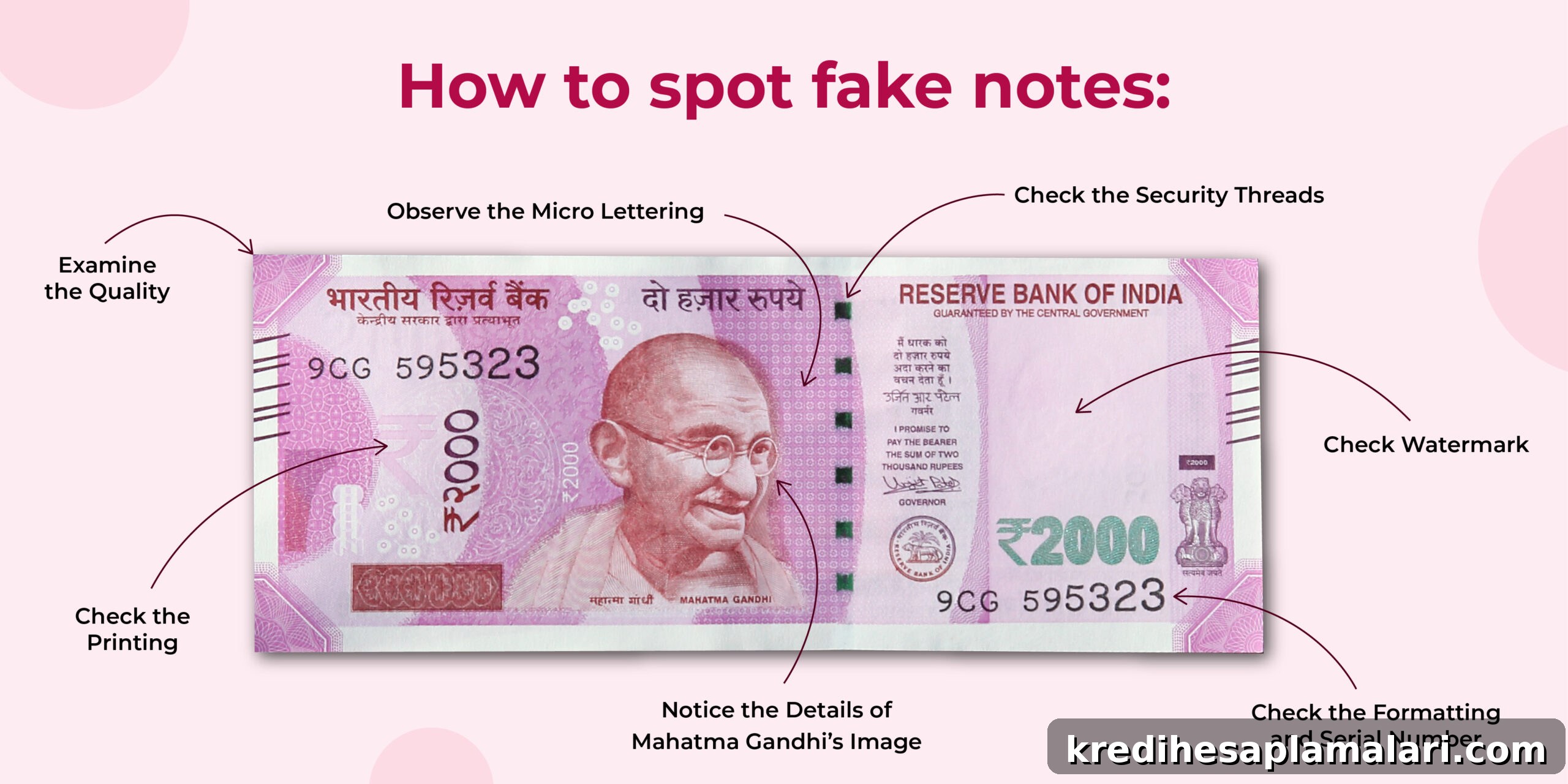
Despite multiple security measures introduced by the Reserve Bank of India, counterfeit currency remains a persistent problem in India. Fake notes harm both the economy and individuals, so being able to recognise counterfeit currency is essential to avoid financial loss. The following guidance explains practical and reliable ways to spot fake Indian banknotes.
Observe the Micro Lettering
Micro lettering is a strong defence against counterfeiting. Small text and fine lines near Mahatma Gandhi’s portrait are difficult for counterfeiters to reproduce perfectly. To check micro lettering:
- Use a magnifying glass.
- Inspect the area near Gandhi’s portrait and the words “Reserve Bank of India.”
- The tiny lowercase letters should be sharp, consistent and legible.
- Micro text often appears as a continuous string of very small characters.
Counterfeit notes may show blurred, missing or incorrectly formed micro letters. Any inconsistency in these details is a red flag.
Notice the Details of Mahatma Gandhi’s Image
The watermark of Gandhi’s portrait is a key security feature. On genuine notes, the watermark is finely detailed and consistent in tone. Counterfeiters sometimes use grease or heavy ink when attempting to mimic the watermark, resulting in a thicker, less precise image. Hold the note up to a light source to check the clarity and uniformity of the watermark.
Examine the Quality
Authentic Indian currency paper is made from a cotton and linen blend. The texture should feel fibrous and durable. Genuine notes have crisp printing where the ink does not bleed into adjacent elements. If the note feels smooth like ordinary paper or the print looks blurred, it could be counterfeit.
Check the Security Threads
Genuine notes include an embedded security thread woven into the paper. This thread usually shows alternate lettering such as “Bharat” (in Devanagari) and “RBI,” and it displays a reflective effect when held against light. Counterfeiters often print a simulated thread on the surface, which is easier to spot. Hold the note to a light source and look for the embedded thread and its holographic shine.
Check the Formatting and Serial Number
Authentic currency features uniformly spaced, consistently sized serial numbers. On counterfeit notes you may notice misaligned numbers, uneven spacing, or inconsistent font sizes. If you receive multiple notes in a bundle, check that serial numbers are unique and consistently printed.
Check the Printing
Genuine Indian banknotes use intaglio-style printing that creates a raised effect you can feel by running your fingertip over key elements, such as the portrait or denomination numerals. If the printing feels flat or lacks tactile detail, the note may be fake.
When in doubt, compare the suspect note to a known genuine example. Assess colour tones, texture and print clarity—these combined cues help identify counterfeits. If you find a suspected fake note, retain it and report it to local authorities.
Fake Indian Currency Note
Counterfeit notes typically resemble real banknotes at a glance but fail under closer inspection of security features. Be vigilant and check multiple security elements rather than relying on a single sign.
Note: If you require legitimate financial assistance, consider regulated lending options. Evaluate lenders carefully and confirm their credentials before sharing personal information or accepting funds.
FAQs on Spotting Fake Indian Currency Notes
How can I identify the colour-shifting ink on Indian currency notes?
Colour-shifting ink is a visible security feature on certain denominations (notably ₹500 and ₹2,000). When held flat, the ink appears green; when tilted, it shifts to blue. Check this effect by tilting the note under good light.
What are the differences between the old and new series of Indian currency notes?
Newer series notes may include updated watermarks, redesigned security threads, revised micro lettering and other enhanced security elements. Comparing an older note with a newer issued note can reveal these differences in features and layout.
How do I report counterfeit currency to the authorities?
If you receive suspected counterfeit currency, contact your local law enforcement agency and hand over the note for investigation. Avoid passing the suspected note to others and retain it as evidence for the authorities.
What are the legal consequences of using fake currency in India?
Using, possessing, or distributing counterfeit currency is a serious offence. Under Indian law (IPC Section 489C and related provisions), penalties can include substantial fines and imprisonment, which may range up to several years or more depending on the severity of the offence.