ECS vs NACH: Full Forms, Meanings and Main Differences
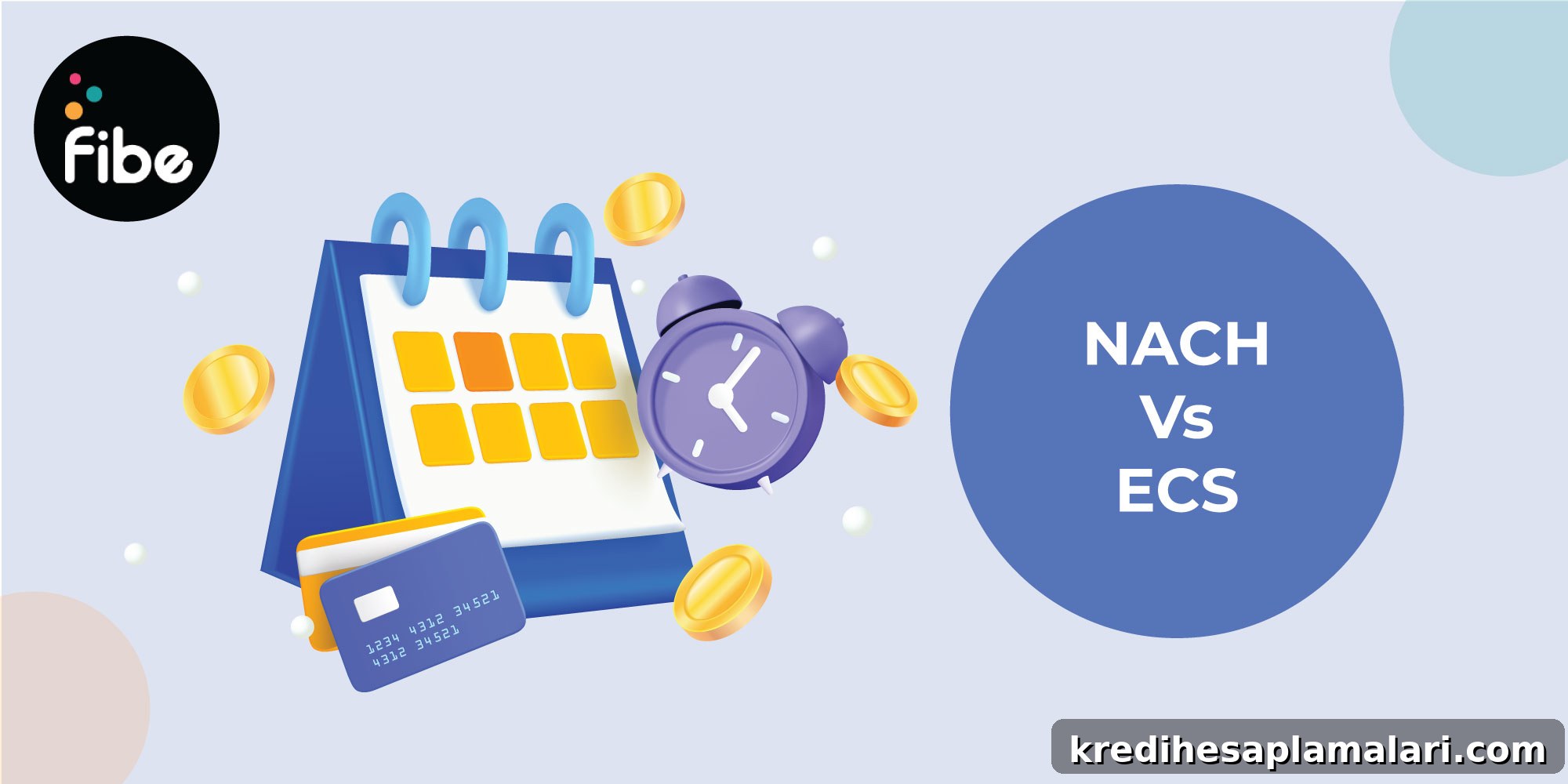
The growing shift to digital payments has made it important to understand the difference between NACH and ECS. Both are widely used electronic transfer methods that enable automatic debits and credits to bank accounts. Banks, businesses, government agencies and merchants rely on NACH and ECS to process recurring transactions, but knowing how they differ helps you pick the right option for a given situation.
What is NACH?
NACH stands for National Automated Clearing House. Launched by the National Payments Corporation of India (NPCI), NACH is a web-based, centralized payment system designed to handle high volumes of recurring transactions efficiently. It automates payments such as EMIs, SIPs, salaries, pensions and government subsidies, making them faster and more reliable.
Types of NACH
NACH operates in two primary modes:
- NACH Credit: Used by organisations to disburse funds to many beneficiaries at once, for example, salaries, dividends or refunds.
- NACH Debit: Used to collect recurring payments from customers, such as loan EMIs, insurance premiums, subscriptions and utility bills.
How NACH Works
NACH is a secure, centralised system administered by NPCI and adopted by banks, government entities and businesses. To enable automated debits, a customer provides a mandate authorising NACH transactions from their bank account. After bank and NPCI verification and validation with the beneficiary bank, the authorised payments are automatically processed as per the mandate schedule.
What is ECS?
ECS stands for Electronic Clearing Service. Introduced by the Reserve Bank of India, ECS is an older mechanism for bulk transfers such as salaries, pensions, insurance premiums and recurring bill payments. Although still in use, ECS is gradually being replaced by faster, more streamlined systems like NACH because ECS often requires more paperwork, branch visits and manual intervention.
Types of ECS
ECS functions similarly to NACH with two basic types:
- ECS Credit: Used by organisations to credit accounts en masse, for example, salary credits, interest payouts or dividend distributions.
- ECS Debit: Used by companies to automatically collect payments, such as loan EMIs, utility bills or insurance premiums.
How ECS Works
ECS requires the collecting bank or merchant to obtain customer bank details and consent in the form of a mandate. The mandate is submitted to the customer’s bank, which processes the request and forwards payment instructions through the clearing house. Because of manual steps and varying processing cycles across banks, ECS settlements typically take longer than NACH.
Key Differences Between NACH and ECS
Below are the main distinctions between the two systems to help you compare NACH vs ECS:
| Metrics | ECS | NACH |
|---|---|---|
| Geographical Coverage | Limited to select centres managed by banks and the RBI | Nationwide coverage across the banking network |
| Transaction Types | Primarily used for credit transactions | Supports both credit and debit transactions |
| Presentation & Settlement | Typically takes 3–4 days to process | Usually settled within 1 working day |
| Activation Time | Can take up to 30 days for activation | Activation generally completed within around 10 days |
| Dispute Management | No dedicated dispute management framework | Offers a structured dispute resolution mechanism |
| Reference Tracking | Does not issue a unique tracking reference | Generates a Unique Mandate Registration Reference (UMRR) for tracking |
ECS Return Charges
If an ECS debit fails—due to insufficient balance, incorrect account details or signature mismatch—the bank may levy an ECS return charge. These charges vary by institution and typically range from ₹200 to ₹750 per failed transaction. Repeated ECS failures can also affect a payer’s repayment record.
NACH Return Charges
When a NACH transaction cannot be processed for reasons such as insufficient funds, incorrect mandate details or account-related issues, banks apply NACH return charges. The fee range is similar to ECS, commonly between ₹200 and ₹750 depending on the bank. Multiple NACH failures may negatively impact a borrower’s credibility with lenders.
Both ECS and NACH simplify recurring payments, reduce manual effort and help ensure timely settlements. NACH offers faster processing, wider coverage and better tracking, making it the preferred choice for most large-scale recurring payment needs. ECS remains in use where legacy setups still exist, but its role is diminishing as digital systems evolve.
FAQs on NACH and ECS
What are the advantages of NACH over ECS?
NACH offers wider banking coverage, faster processing, reduced manual intervention and a more suitable framework for recurring payments. Presentation and settlement are typically faster with NACH—often within 24 hours—whereas ECS usually takes 3–4 days.
What is the difference between ECS and a mandate?
ECS is the electronic clearing system used for bulk transfers. A mandate is the authorisation document a customer provides to permit debits or credits through ECS (or NACH). In other words, the mandate is the consent; ECS is the mechanism for execution.
How much are ECS return charges?
ECS return charges are not uniform and differ across banks and financial institutions.
Are ECS and NACH the same?
They serve the same purpose of facilitating bulk or recurring transfers, but they are not the same system. ECS is older and generally slower; NACH is the newer NPCI-driven platform with faster processing and broader coverage.