WhatsApp Banking Explained: Services, How It Works & Safety Tips
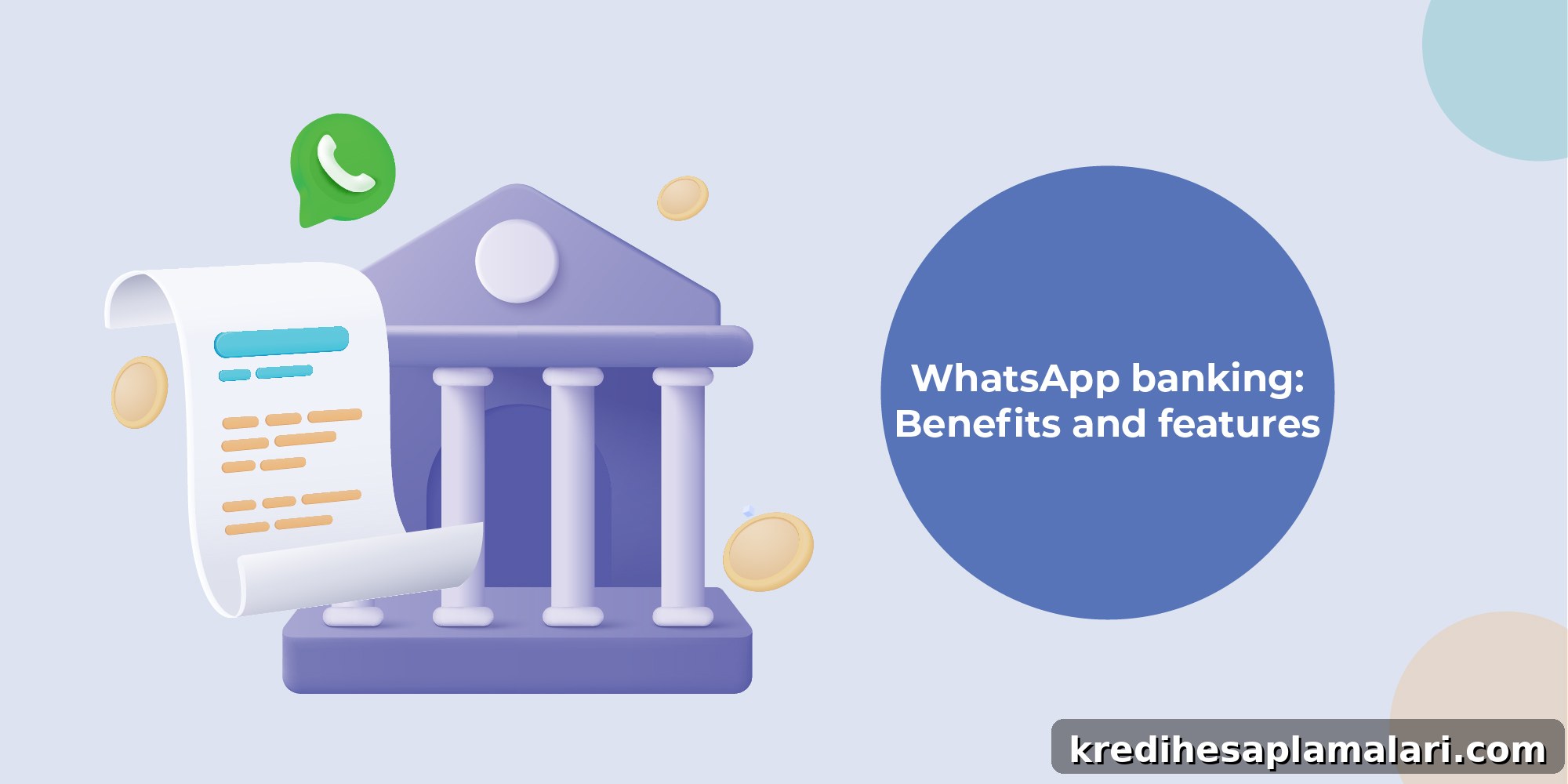
WhatsApp banking lets you access basic banking services—such as balance enquiry, mini statements, account updates, service requests and customer support—directly through WhatsApp. To get started you typically save your bank’s official WhatsApp number, send a greeting like “Hi” from the mobile number registered with your bank, and select a service from the chat menu.
This channel is ideal for quick, everyday queries but does not replace a full mobile banking app or net banking for advanced tasks like large fund transfers, investments, detailed account management or other sensitive transactions.
What is WhatsApp Banking?
WhatsApp banking is a chat-based digital banking service that enables customers to interact with their bank via the bank’s verified WhatsApp Business account. Instead of calling customer care or logging into internet banking for small requests, customers can use a familiar chat interface to access selected banking services.
Common use cases include checking account balance, requesting a mini statement or finding the nearest ATM by sending a message to the bank’s verified WhatsApp number and following the menu prompts. Many banks combine automated chatbots, menu-driven options and, when needed, live agent support to handle queries. Exact services vary by bank.
How Does WhatsApp Banking Work?
WhatsApp banking operates through a bank’s official WhatsApp Business account and relies on automation, APIs and secure customer verification. Typical steps are:
- Bank creates an official WhatsApp Business account
Banks use verified business profiles or the WhatsApp Business Platform/API to provide automated, scalable customer support.
- Customer opts in
You may need to save the bank’s WhatsApp number, send “Hi”, scan a QR code or tap an official WhatsApp link from the bank’s website or app.
- Bank verifies your registered mobile number
Most banks allow WhatsApp banking only if your WhatsApp number matches the mobile number registered with your bank account.
- You receive a menu of services
The chatbot typically shows options such as balance enquiry, mini statement, debit card services, loan details, branch locator and account support.
- Sensitive actions may require OTP or additional verification
For higher-risk requests, banks often ask for OTP-based authentication or redirect you to the mobile banking app or net banking.
- You receive information instantly in chat
Responses are provided within the WhatsApp conversation, which makes many tasks simple and quick. The WhatsApp Business Platform supports verified senders, chatbots, interactive buttons, media and agent handoff to deliver conversational service at scale.
Features of WhatsApp Banking
Key features that make WhatsApp banking convenient:
| Feature | What it means for users |
|---|---|
| Chat-based banking | Access selected banking services through a familiar WhatsApp conversation instead of navigating multiple app screens. |
| Automated responses | Chatbots can answer common queries instantly, such as balance, mini statement or branch details. |
| 24/7 availability | Automated services are usually available round the clock, even outside branch hours. |
| Verified business account | Banks use official WhatsApp Business profiles so customers can identify genuine communication. |
| End-to-end encryption | Messages are protected by WhatsApp encryption; banks also use consent-based templates and verified senders for enterprise flows. |
| Opt-in and opt-out control | You can choose to start or stop WhatsApp banking messages according to the bank’s process. |
| No additional app required | Basic services are accessible via WhatsApp without downloading a separate banking app. |
Why Choose WhatsApp Banking?
WhatsApp banking speeds up everyday tasks and makes account information more accessible. Benefits include:
- Convenience: Check account details or service updates without visiting a branch.
- Familiar interface: Minimal learning curve since many people already use WhatsApp daily.
- Quick response: Automated menus reduce wait times for common queries.
- Easy access across banks: You can reach services from multiple banks in the same app.
- Good for non-tech-savvy users: The chat format is simpler for many basic tasks than navigating a full banking app.
- Available anytime: Automated WhatsApp banking services typically work 24×7.
Example: When travelling, instead of logging into net banking, you can request a mini statement from your bank’s WhatsApp number and receive the last few transactions in a few taps.
Banks Offering WhatsApp Banking in India
Many major banks in India provide WhatsApp banking. Published numbers may change, so always verify the number on the bank’s official website or app before initiating contact.
| Bank | WhatsApp banking number |
|---|---|
| State Bank of India (SBI) | 90226 90226 |
| HDFC Bank | 70700 22222 |
| ICICI Bank | 86400 86400 |
| Axis Bank | 70361 65000 |
| Canara Bank | 90760 30001 |
| Union Bank of India | 96666 06060 |
| Kotak Mahindra Bank | 022 6600 6022 |
Safety note: Do not trust a WhatsApp banking number sent by an unknown contact. Always verify numbers on the bank’s official website or app.
How to Register for WhatsApp Banking
Registration varies slightly by bank but is straightforward. A typical process:
- Save your bank’s official WhatsApp number — only use the number listed on the bank’s official site or app.
- Open WhatsApp and find the saved contact.
- Send “Hi” or “Hello” to activate the menu.
- Choose your preferred language if prompted.
- Verify your identity if asked; the bank may confirm your WhatsApp number matches the one registered with the account.
- Select the service you need such as balance enquiry, mini statement, card help or branch locator.
Important registration condition
Your WhatsApp number must normally match the mobile number registered with your bank to access account-specific services.
Fund Transfer via WhatsApp Banking
WhatsApp banking and WhatsApp UPI payments are distinct but related. WhatsApp banking handles account information and service requests, while WhatsApp UPI supports peer-to-peer payments through UPI.
WhatsApp Banking
Chat-based service for account information, support and selected service requests.
WhatsApp UPI Payments
Allows eligible users to send and receive money on WhatsApp using UPI. Typical steps for sending money via WhatsApp UPI include opening the recipient’s chat, tapping the payment icon, selecting your bank account, completing UPI setup if needed, entering the amount and confirming with your UPI PIN.
Safety reminder: Never share your UPI PIN, OTP, debit card PIN or net banking password on WhatsApp. Banks will not ask for these details in chat.
Services Available Through WhatsApp Banking
Available services vary by bank but commonly include:
- Account balance enquiry
- Mini statement
- Savings/current account updates
- Fixed deposit interest rate information
- Debit card information and card blocking
- Credit card bill amount and due date
- Chequebook requests and status
- Branch and ATM locators
- FASTag services
- Pre-approved loan offers and application status
- Loan account details and EMI updates
- Product launch notifications and service request tracking
- KYC or profile update guidance
- Customer support ticket creation
- Wealth management information and suspicious transaction alerts
- Payment reminders and confirmations
- Appointment booking or branch visit scheduling
WhatsApp banking is commonly used for customer support, onboarding, notifications and OTP-based authentication flows, while more complex transactions are directed to official apps or web portals.
WhatsApp Banking vs Mobile Banking App
WhatsApp banking is best for quick, limited tasks; a mobile banking app provides a broader and more secure environment for complete banking needs. Key differences:
| Parameter | WhatsApp Banking | Mobile Banking App |
|---|---|---|
| Best for | Quick queries and service requests | Full-service digital banking |
| Access | Through WhatsApp chat | Through the bank’s official app |
| Login process | Registered mobile number, menu or OTP | Login PIN, password, biometrics or device binding |
| Services | Limited (balance, mini statement, card help, branch locator) | Comprehensive (fund transfers, investments, statements, profile management) |
| Fund transfer | Usually limited or redirected to UPI/app | Available via IMPS, NEFT, RTGS, UPI and internal transfers |
| Security control | Safe for basic use with verified numbers | Better suited for sensitive and high-value transactions |
| Availability | Often 24×7 for automated services | Usually 24×7, subject to scheduled maintenance |
Which One Should You Use?
Use WhatsApp banking for quick tasks like balance checks, mini statements, card support or branch locators. Use the mobile banking app or net banking for fund transfers, investments, loan repayments, statement downloads and changes to sensitive account information.
Is WhatsApp Banking Safe?
WhatsApp banking can be safe when you interact only with your bank’s official verified number. Messages are sent from verified business accounts and enterprise flows use consent-based templates and encryption. However, user behaviour matters: fraudsters may create fake accounts, send phishing links or impersonate bank staff.
Follow these safety tips:
- Use only the WhatsApp number listed on the bank’s official website or app.
- Confirm the verified business profile before interacting.
- Never share OTPs, UPI PINs, ATM PINs, CVV, card expiry dates or net banking passwords.
- Do not download APKs or apps sent via WhatsApp.
- Avoid suspicious links claiming urgent KYC updates, blocked accounts or rewards.
- Do not transfer money based on instructions from unknown contacts.
- If in doubt, call your bank’s official customer care number.
- Report cyber fraud to the appropriate national cybercrime channels if needed.
When Should You Use WhatsApp Banking?
WhatsApp banking is ideal for quick tasks such as balance checks, mini statements, locating branches or ATMs, card blocking guidance, chequebook requests, loan or credit card application status checks, FASTag help and general product information. It is not ideal for large fund transfers, investment transactions, detailed statement downloads, sensitive profile updates or disputes requiring documentation—these should be handled via the bank’s app, website or branch.
Final Thoughts
WhatsApp banking brings basic banking services into an app millions already use. It is fast, easy and useful for routine account-related queries and support. Use it carefully: verify the bank’s official WhatsApp number, avoid sharing confidential details and rely on the bank’s official app or net banking for sensitive transactions.
FAQs on WhatsApp Banking
1. How do I register for WhatsApp banking?
Save your bank’s official WhatsApp number, open WhatsApp and send “Hi” from your registered mobile number. Follow prompts to select language, accept terms and choose a service.
2. What are the features of WhatsApp banking?
Features typically include chat-based service, automated menus, balance enquiry, mini statements, account updates, card support, branch/ATM locator, service requests, encryption, verified business profiles and user opt-in/opt-out control.
3. Why is WhatsApp banking important?
It speeds up basic banking by giving quick responses without visiting a branch, calling customer care or logging into a separate banking app.
4. Is WhatsApp safe for banking?
It is safe when you interact with a verified bank number and avoid sharing confidential information. Never disclose OTPs, UPI PINs, ATM PINs, CVV codes, passwords or complete card details via WhatsApp.
5. What is the Central Bank of India WhatsApp banking number?
Commonly published numbers include 95552 44442 for Central Bank of India, but numbers can change. Always verify on the bank’s official website or app before use.
6. What is the Bank of India WhatsApp banking number?
A commonly published number is 83760 06006; verify it on Bank of India’s official channels before contacting.
7. What is the UCO Bank WhatsApp banking number?
A commonly published number is 83340 01234; always confirm on UCO Bank’s official website or customer support channels.
8. Is WhatsApp banking available 24×7?
Most automated WhatsApp banking services are available 24×7, though some options may depend on bank systems, scheduled maintenance, OTP delivery or agent availability.